
As seen in









Formaticum Cheese Blog
Meet Your Mongers: International Women's Day
Women are and always have been inherently connected to cheese. Cheesemaking was traditionally a woman's task, as evidenced by written record as well as historic recipes - for example, some of the earliest cheddar-style recipes were very forgiving and included a long, slow acidification to allow for the cheesemaker to accomplish other tasks during the day. Many families owned a few cows and women were responsible for milking them and turning that bit of milk into cheese, the ultimate value-added product. The blueprint for many homes and creameries included a make room that was connected to the kitchen so that the cheesemaker could keep an eye on the vat while working on other things. The invention of Camembert is credited to Marie Harel, and the artisan cheese renaissance in the United States would not have been possible without the Goat Ladies of the 80s, a group of goat farmers who began making French-inspired chèvre and changed the landscape of the American cheese scene forever. Today, women all over the world and from diverse backgrounds work hard to both uphold this legacy and create their own - from cheesemakers to affineurs, educators to importers, farmers to buyers, women continue to be integral to the cheese industry, now more than ever.
In honor of International Women's Day, the March edition of Meet Your Monger highlights not one, but four women in cheese who we believe deserve recognition for their hard work and contributions to the cheese industry. We spoke with them about their career paths, their advice for cheese consumers, and why they all chose Formaticum products for their business and personal use.
Mary Casella is a New York-based cheesemonger and educator and has been working in cheese for 9 years. She is a manager of the Central Market at Tin Building in Manhattan and has worked hard to shape and refine the cheese and charcuterie selection. In 2021 Mary was the inaugural recipient of the Daphne Zepos Research Award and she continues to champion and highlight the work and impact of women in the industry.
Agela Abdullah is a seasoned cheese educator who has worked with cheesemakers around the country over her 15+ years in the industry. After attending culinary school, she discovered her passion for cheese and today is the President of the Cheese Culture Coalition, a nonprofit organization that aims to promote equity and inclusion within the cheese industry by empowering BIPOC communities through education.
Vanessa Tilaka is the co-owner and Head Cheesemonger at Agnes Restaurant & Cheesery in LA, a full-service cheese shop, restaurant, and event space. Vanessa has worked in the restaurant and specialty food industry for more than 15 years and teaches classes, as well as curates a selection of cheese and other items that rotates frequently and features as many local makers as possible, focusing on products made with integrity by small producers, women, and BIPOC makers.
Amye Gulezian is currently the Specialty Foods Operations Manager at High Lawn Farm in Lee, Massachusetts, a family-owned dairy farm in the Berkshires that milks 100% Jersey cows and was started by a woman named Marjorie Wilde. Amye studied heritage breed and dairy management in France, made raw milk cheese in Indiana, and was a cheesemonger in LA before settling at High Lawn Farm. Amye's main role is to help develop value added products like cheese, butter, and ice cream, with a focus on product quality and consistency as well as relationships with customers and vendors.
What inspired you to pursue a career in cheese?
VT: I always enjoyed eating cheese but didn't really understand differences and little nuances until I started exploring the creameries of Northern California and taking cheese classes at The Cheese School of San Francisco. I became enamored with learning more about it and finding out why they're all so different but similar. I decided I wanted to move from cooking to working in cheese shops and couldn't be happier.
MC: Like a lot of people, I just stumbled upon it when I started to pursue a career in food. It didn't take me long to fall in love with mongering. I've always loved learning history through culture and my degree is in art history and photography and I feel like it all just came together. What's cheese if not history and artistry? I also love being able to share my joy of food with others and help people find their own relationship with cheese.
AA: I was a cook in Virginia when I first had my Eureka! cheese moment with a wedge of Humboldt Fog. Each kitchen I worked in from then on I made sure I was somehow involved with cheese. In 2008 I took a break from cooking and got a part-time job behind the counter at the now-closed Pastoral Artisan Cheese, Bread, & Wine. Next thing I know, it’s going on 16 years and I’m still passionate about the industry.
AG: COWS! I love them all, but specifically I love the variety and diversity of breeds. They all have such unique personalities and quirks and it's all about getting to know them and loving them for who they are…kind of like cheese!! (funny sidenote: my preferred cheeses to eat are actually goat cheeses…)
Overall, I think cheese is such a fascinating food. From it originally being a food of peasants as a way to preserve all the nutrients of milk. Every culture has their own types of cheeses that were 'developed' to be most ideal for their climate, animals, and population. I think that should remain the core of everything we do. Cheese is endless and is for everyone.
How do you use Formaticum products in your business or at home?
VT: We definitely love that Formaticum offers sustainable options for wrapping cheeses, we use Formaticum Zero to wrap cheeses for take-home. We sell Cheese Storage Bags in the shop for ease so guests feel confident in keeping their cheeses fresh without having to fold origami.
MC: I’ve used Formaticum cheese paper almost everywhere I’ve worked. The different sizes and styles make it easy to get a nice clean wrap and you know that when you send someone home with their cheese it’s going to stay in the best shape it can. At Tin Building we use the White Two-Ply for our cuts, both hard and soft cheeses. We use the Perforated Cellophane for our small formats, which allows them to breathe without drying out, and makes it easy to just hand them off to our customers.
AA: I’m always trying new cheese, or buying my favorites so my fridge can get pretty full and disorganized if I’m not careful. Formaticum helps keep my cheese in optimum condition, and helps me keep track of what I’ve got in the drawer, and when I bought it.
AG: At High Lawn Farm we use the Formaticum Cellophane Sheets in our shop for wrapping instead of plastic wrap. This helps to keep the cheese so much fresher and still visible to our customers. The fact that the clear storage sheets are 100% biodegradable means a lot to our farm as we are always trying to find the best and most environmentally friendly and sustainable packaging for our products. Seeing how this industry uses so much single-use plastic, it is important to us to be mindful and to do our part to reduce environmentally harmful waste. Also, I also love bringing the Cheese Storage Bags to demos so I can send guests home with little bags of their favorite goodies.
What is your favorite Formaticum product and why?
VT: White Formaticum Zero. It's clean looking, user friendly, and good for the environment!
MC: I really like the Reusable Cheese Storage Bags. They're easy to use, and honestly at home sometimes I just can’t be bothered with wrapping! Plus, they’re great for storing veggies and other items too…
AA: I love the Reusable Cheese Storage Bags. I always have a huge wedge of Parmigiano-Reggiano in the fridge and the bags are the best way to keep the cheese fresh. The bags don’t tear either, which is great when you’ve got sharp rinds on aged cheeses.
AG: I love the Cheese Storage Bags, for business and personal use. All the cheese I keep in my fridge goes into those and it for sure helps to keep the cheese tasting fresh and lasting so much longer. It is amazing how much longer you can preserve the cheese's quality when you use the right packaging materials at home. Also, I love the Cheese Logs! I like giving them away as gifts to friends or people who are just getting started in exploring cheese. I have one handy whenever I taste a new cheese that I am excited about and don’t want to forget as well as using them during R&D when we are working on recipes or goals for High Lawn Farm cheeses.
If you were a cheese, which one would you be and why?
VT: Brabander Gouda from L'Amuse. It's fun, complex, nutty, and creamy... kinda like me!
MC: I was going to go vague and say any young pecorino – I go hard for anything sheep. The more I thought about it though, Marzolino felt right. My close friends happen to call me Marz (completely unrelated to cheese) and I like to think I’m understated and a little sheepy and sheepish. Marzolino embodies a lot of what I love about cheese too: formerly seasonal, practical and durable, it has that lovely natural shape, and can be enjoyed at any meal of the day. I think cheeses with a nuanced profile make the perfect table cheese. Also hey, coincidentally it's March!
AA: I have always had a special place in my heart for goats and goat milk cheeses so today I’ll say that I’m Monte Enebro. The rind tricks you into thinking you’re getting one kind of cheese, maybe a blue. You’re not quite sure. But when you cut into it it’s not at all what you expect. There are layers of flavor going on from the center to the rind, and like me, it changes and develops as it ages.
AG: Armenian String Cheese- Not only does this cheese remind me of my childhood, it's also just so fun! All beautifully twisted up with bursts of oniony flavor from the nigella seeds, and yet so simple. It's versatile, great in quesadillas/ broiled over toast, or just simply stringed up as a snack or on a board. If you have not tasted it, you are missing out. Simple, fun, familiar, and always there when you just need a little something. - This cheese was a huge part of my childhood before I really got into cheese and I was unable to find it for such a long time. I am now seeing it around more, and I hope she never disappears on me again! I reunited with this cheese at the perfect time in my life, right when I needed it.
What is one thing you wish consumers knew about artisan cheese?
VT: Good cheese is not cheap. Quality ingredients and the art of making really good cheese comes at a cost, and their expertise should not be discounted.
MC: I wish that when people get price shock they understood what goes into cheese making. Dairy farming and cheese making is incredibly hard work– there's no day off. Behind every artisanal cheese is somebody's love and dedication for what they do and the animals and land they work with. It’s not expensive because it’s “fancy”; it's a reflection of the skill, care, and precision with which it's made.
AA: At the Cheese Culture Coalition we say that “Cheese is for Everyone.” I truly believe that. There’s this idea that artisan cheese is out of the average shoppers’ reach, but that’s not true. If you like the 6-8 oz bars of cheddar that you see at the store, try something that’s aged a bit longer. The next time you want some cheddar go try clothbound cheddar. Exploring the artisan cheese world is fun, and isn’t an all or nothing adventure. As my friend and future cheese shop owner Natalie says “All Cheeses Are Beautiful”
AG: IT IS SO MUCH WORK - I wish people knew how much goes into making cheese. From raising the animals, feeding and caring for them - farming is 365 days a year commitment and is extremely hard work. During the vat production, it is hot and humid and long labor intensive back breaking days. There's so much bending, lifting and long weird hours. A cheesemaker’s life is dictated by pH and what the cheese needs. Then there's the days, weeks, or even years of affinage. Washing, flipping, brushing, adjusting, and spending time in cool dark spaces for many many many hours is not for the weak minded. Finally, delivering the cheese to the care of a store and a monger. The mongers we work with are so dedicated, passionate and educated. We really love working with them to translate all the hard work of the farm and production to the customers.
I think consumers and some mongers may not realize how many variables there are in all these steps, how much opportunity there is for things to go wrong and how it is almost a miracle when you can make the same cheese consistently well.. Especially with so many variables that you may not realize were a problem until months later. Cheesemakers are some crazy dedicated people who really invest so much into producing an incredibly diverse food and I hope they continue to get the recognition and support they deserve.
Lastly, makers really rely on mongers to represent them. I always try to encourage mongers to think about all the hours and hard work that went into making a particular cheese. As much as they need to sell the cheese, they also need to be mindful of what the cheesemaker would think if they walked into the shop and saw their cheese at that counter. Is it what the cheesemaker intended? Also, ask questions! Ask your monger, ask your maker, and ask your farmer. There can be a real disconnect, but with social media as well as just within the artisan cheese community, we have more access than ever before to connect with the producers and I think we should really be leaning into that. ‘Why is this batch softer or harder? What impacts these changes? How can we work together to move a batch we may not be 100% proud of?’ These are all great questions to ask.
What is your favorite cheese storage fact?
VT: Cheese is alive and needs to breathe! Also, don't buy more cheese than you can consume in 2 days.
MC: When I first learned that you could just clean the mold off aged cheeses to give it new life I thought that was one of the coolest things. I still think it’s pretty cool that even when your cheese has been a little neglected, all you have to do is give it some TLC.
AA: I always store my refrigerated cheeses in a vegetable crisper drawer. The temperature there is the most stable, and depending on the fridge you have you can even adjust the humidity. Cheese goes into a bag, or gets wrapped, and then it goes right in the drawer.
AG: Cheese is alive and there is no one best practice for all of them. It's all about looking at and observing what the cheese needs whether it be with home storage, at the counter, in the vat or in the caves. Cheese can last much longer than you may think. Use all your senses, and your best judgment. Some cheeses last well beyond their ‘best by date’, so don’t just throw it out. Also, people always laugh, but think about what else is in your fridge. Cheese has so much fat in it and fat absorbs flavor. If not stored or wrapped properly, cheese will absorb other flavors in your fridge, or from its packaging. I can always taste when cheese has been packed in plastic or vacuum sealed for too long. It makes me sad to taste a piece of cheese that tastes like plastic after all the hard work that went into making it. So the correct packaging is so important to preserve the integrity and flavor of our deliciously decadent dairy foods.
To nominate a shop or monger for the Meet Your Monger series, email emilia@formaticum.com.
Debunking Common Cheese Myths with Formaticum
One of the most wonderful things about cheese is that there is always something new to learn about this delightful dairy product! But the amount of information available on the internet can be overwhelming, and not everything you read is true. Here at Formaticum, we strive to be a reliable source of information for cheese lovers, and all of our posts are written and fact-checked by real cheese professionals with years of experience working behind the counter and in other parts of the industry.
To help you deepen your understand and appreciation for cheese, we've put together a list of some of the most common cheese myths and the truth about them.
MYTH: Lactose-intolerant folks cannot consume cheese.
TRUTH: Longer-aged cheeses contain little to no lactose and are easier on the stomach! Lactose, which is milk sugar, is converted into lactic acid during the cheesemaking process, and any residual lactose continues to be converted throughout aging until it is virtually undetectable. This is why fresh or younger cheeses like Mozzarella or Brie may cause more gastrointestinal distress than harder cheeses like clothbound Cheddar or aged Gouda.
MYTH: Some cheeses are crunchy because of salt crystals.
TRUTH: Those crunchy crystals are not actually salt! Cheeses like aged Gouda and Parmigiano Reggiano contain tyrosine crystals, which are buildups of amino acids that occur naturally as the cheese ages. They're commonly known as "flavor crystals" in the cheese industry, not because they themselves are flavorful, but because their presence usually indicates a longer-aged cheese that most likely will have intense flavor. Some cheddars will contain crystals known as calcium lactate, which can also occur on the outside of a block cheddar and are commonly mistaken for mold.
MYTH: If a cheese has visible blue or green mold on the surface, the entire piece is contaminated and needs to be thrown out.
TRUTH: It is normal and expected for cut pieces of cheese to develop surface mold over time, as molds and yeasts are integral to the cheesemaking and aging process. Cheese would not be cheese without mold! While moldy fresh or soft cheeses should be tossed, harder aged cheeses can and should be triaged. Aged cheeses are low moisture and not porous enough for the mold to penetrate too far, so cheese professionals and microbiologists recommend trimming the affected side and continuing to eat or cook with the cheese. If you want to avoid dealing with mold altogether, store your cheese properly - use Formaticum Cheese Storage Products (we recommend the new Reusable Bags and Sheets!) to keep the cheese fresher, longer in your fridge. You can also buy less cheese, more often to ensure maximum freshness whenever you eat or cook with your cheese.
MYTH: "Sharp" is a catch-all term for "strong" or "very intense" when it comes to describing the flavor of a cheese.
TRUTH: The term "sharp" has recently become very misunderstood due to some very effective marketing from larger cheese producers. "Sharp" actually refers specifically to that acidic, slightly bitter zing that is commonly found in cheeses like cheddar, and increases with age. However, it is not a one-size-fits-all term, as different cheeses from different producers can taste different even at the same age profile. The next time you visit your local cheesemonger, instead of asking for a "sharp" cheese, trying using other adjectives to more effectively describe the flavor profile you're looking for - a grassy or earthy cheddar, an oniony or nutty Alpine, a barnyardy Pecorino or Ossau Iraty. If you don't know where to start, ask your cheesemonger to help! Tasting cheeses with your monger will help you develop your palate and identify the specific flavor profiles you enjoy and want to continue to discover.
MYTH: Orange cheese is a uniquely American invention and denotes lower quality product.
TRUTH: Not all orange cheeses are equal, and all cheeses (including slices) have their place! While some orange cheeses are processed or cheese "product," dying cheese orange has a long and storied history that actually originated in the UK. Cheeses like Red Leicester, Cheshire, and even some Gouda is colored orange using a natural dye called annatto seed, which does not affect the flavor or texture of the cheese. It was originally meant to make the cheese stand out in the market against other, paler cheeses but today is more of a stylistic choice.
MYTH: Raw milk cheeses are not allowed in the United States.
TRUTH: Raw milk cheese is not inherently dangerous, and the FDA allows the import and sale of raw milk cheese that has been aged for a minimum of 60 days. This includes raw milk cheeses that are made in the US, of which there are many! Quite a few of your favorite European cheeses are made with raw milk in their authentic form - for example, Parmigiano Reggiano, Le Gruyère AOP, and Comté must be made only with raw milk, according to PDO regulations. Imitation products like "Parmesan" and generic "gruyere" can be made with pasteurized milk, but cannot receive the PDO seal because they do not follow the stringent rules set by the consortium. Some producers of classic European cheeses like Brie de Meaux and Camembert de Normandie will produce pasteurized versions of these cheeses made specifically for the American market, but the flavor is not quite the same, as raw milk generally produces more complex flavor in cheese than pasteurized milk.
Is there a cheese myth you want us to debunk? Email us at hello@formaticum.com with your questions and comments!
Meet Your Monger: Kai Norton

The February edition of Meet Your Monger highlights Kai Norton, the Cheese Manager at the woman-owned Bedford Cheese Shop in NYC, and one of the brightest stars in the next generation of cheesemongers. They are responsible for keeping the cheese case stocked with the best domestic and imported products they can find, as well as training other mongers on how to properly care for Bedford Cheese Shop's stellar selection. A passionate educator, Kai also teaches public cheese classes in the BCS education space and helps organize monthly cheesemonger education events. Kai also recently competed in the 2023 Cheesemonger Invitational, and was awarded an American Cheese Society scholarship, and they are currently serving on the ACS Education Committee. Read our interview with Kai below to learn more about their current role, how they draw inspiration from the cheese community, and why they love using Formaticum products.
What inspired you to become a cheesemonger?
Once upon a time, I worked at a small local market called Local Foods in Chicago, IL. Having been laid off from a third wave specialty coffee shop at the beginning of 2019, my partner helped me get a job packing bulk items for the pandemic panic-buying era. Everyone needed 25 pounds of beans, rice and flour! So I packed it.
Months down the road, I had moved into the role of Category Buyer. They needed help in the deli and cheese so I opted to help out because it sounded so interesting and I really wanted to learn how to build boards. I was immediately fascinated by this unknown realm- rinds, blues, cheddar meets a blue - I couldn’t believe it.
When Immortal Milk did a highly conceptual guided audio tasting in collaboration with Local Foods, I was amazed - I remember being floored that this was a job!
Conceptual food art brimming with dramaturgical, anthropological and historical styling choices, table design, and thoughtful pairing with unique handmade accoutrement….plus cheese!? It didn’t click until I saw someone who was Black doing this work - I never could have imagined there would be this community, so I went for it.

I scoured the internet to figure out how to pivot from food service/buying to working with cheese once the move to NYC was official. So here we are - I never could have dreamed up this reality but I’m grateful for the roundabouts on the road and the great people I have met along the way.
How do you use Formaticum products at your counter?
We use Formaticum as the recommended cheese storage method for customers coming in to buy large amounts of cheese. They are comfortable getting that extra hunk of Comté because they know it will hold up in the Formaticum Cheese Storage Bags or Sheets, both of which we sell at the counter.

What is your favorite Formaticum product and why?
I am a fan of the Professional 4-Knife Set. It contains four distinct cheese tools: a general cheese knife, blue cheese knife, soft cheese knife and cheese spreader.
Unlike many others, they do the job they are supposed to do without you losing a limb, taking chunks out of your hard cheeses or smooshing that gooey soft goat cheese. It's just a really great cheesemonger toolkit, especially beyond the counter.
If you were a cheese, which one would you be and why?
Zimbro - a cute little Torta-style cheese.
Zimbro can be quiet and understated, and it has a unique tang of personality but only reveals it with time. It can be pudgy, slightly firm or a gooey mess that’s kind of sweet but has a bite when necessary.
It has a lot going on, and is hard to pin down- but reliable and true to itself.
It is evershifting/fermenting.

What is one thing you wish consumers knew about artisan cheese?
The robust ecosystem that sustains such an ancient, sisyphean process born of necessity and passed down to spark passion for tradition in their predecessors.
The energy, sweat, tears, years, land, ruminant, microbe and human hand that align these elements and shepherd these gems into existence. Artisan cheese is a great opportunity to remind consumers of the ethos, the humility, the humanity and respect behind food- but especially artisan cheese. This is what you are paying for.
I’d like consumers to remember to savor.

What is your favorite cheese storage fact?
Mold is not scary.
You can cut off mold and salvage most cheeses- there’s little reason to have any waste if the cheese is first, properly cared for in the case, and then properly wrapped and stored.
We couldn't have said it better ourselves, Kai!
Follow Bedford Cheese Shop on Instagram @bedfordcheeseshop and Formaticum on Instagram and TikTok @formaticum, and stop by BCS if you're in NYC!
To nominate a shop or monger for the Meet Your Monger series, email emilia@formaticum.com.
Monthly Recap: February 2024
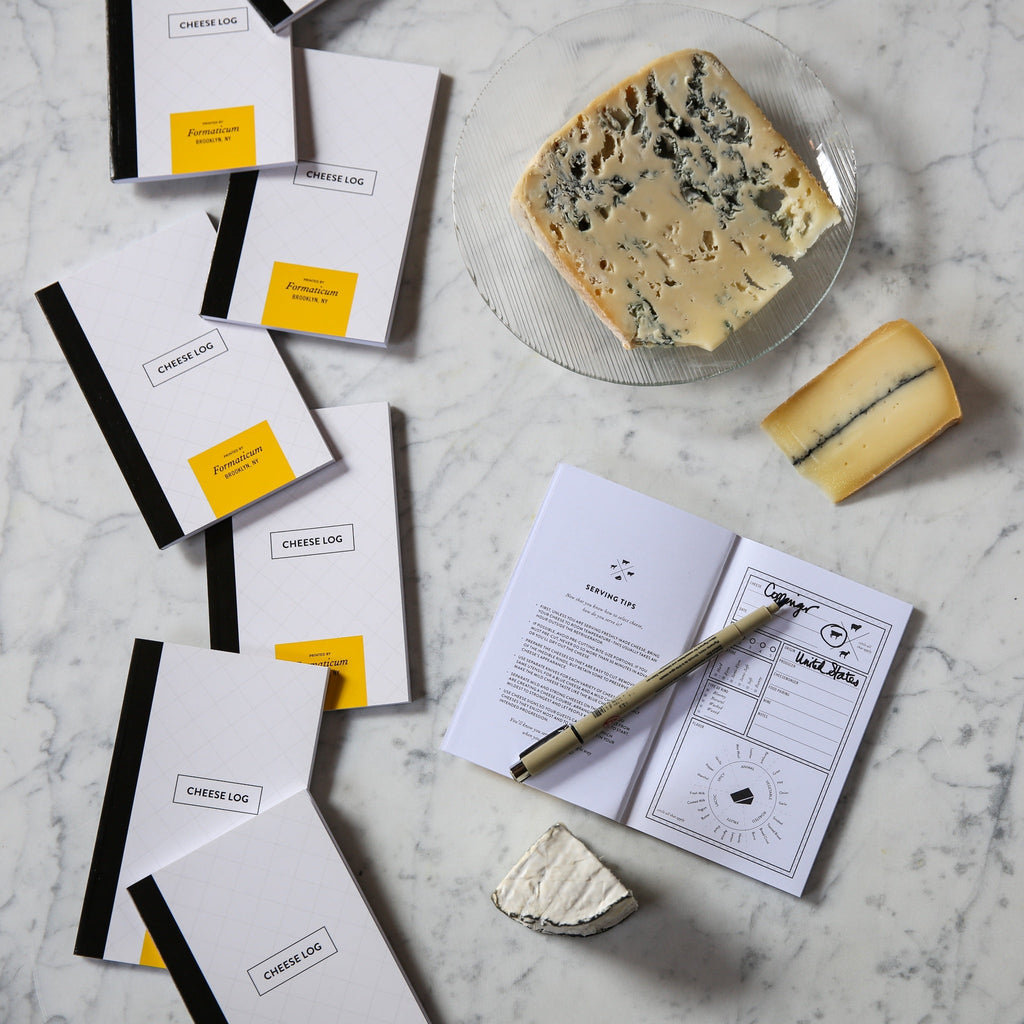
February may be the shortest month of the year, but this month certainly wasn't short on cheese information and education! We covered a variety of cheesy topics and even launched some new products. Here's a quick recap of everything we discussed this month:
If you wish you liked blue cheese but it's a bit too intense for you, there's no reason to feel blue! Try these monger-approved pairings to help make blue cheese more approachable and enjoyable. Plus, we included a brief history of blue cheese, and some stellar serving and storage tips.
It's true - good cheese isn't cheap. But do you know why? Read our blog post that breaks down a cheese's journey from farm to cave to boat to cheese shop, and helps foster a better understanding of and appreciation for cheese that is absolutely worth the price tag.
Need a unique gift idea for your special someone? While Valentine's Day may have passed, Tête de Moine rosettes are always a good alternative to roses for any occasion. Learn more about this historic Swiss cheese and how to serve it in this blog post.
What is rennet, and what does it have to do with nursery rhymes? Check out this blog post that explains why rennet is so important to the cheesemaking process, and how to discuss rennet with your cheesemonger to select the cheese that is right for you.
And finally, it's a Leap Year, so it's time to Leap into something new the next time you visit the cheese shop. This blog post outlines some of the most popular cheeses that customers ask for, and what you should ask for if you want to try something new. Remember - your cheesemonger is your friend and your best resource!
Thanks for joining us this month! Check back in March for more cheese serving tips, cheese facts & history, wrapping tutorials, and so much more. And don't forget to follow us on Facebook, Instagram, TikTok, and Youtube. If you have any questions or want to suggest a topic for us to cover in the future, please email emilia@formaticum.com.

Bienvenue sur le blog de formaticum
Notre maison pour partager nos chroniques fromagères et plus encore.
Categories
Messages récents
Wire Cheese Cutter Vs Traditional Knife: Choosing the Right Tool for Your Cheese
5 Best Knives for Cutting Different Types of Cheese
10 Cheese Storage Tips to Keep It Fresh Longer
Upcoming Events
6 mars 2022 - 15:00
Festival du fromage artisanal de Californie
26 -27 mars 2022
Centre d'événements du comté de Sonoma
1350, chemin Bennet Valle
Santa Rosa, Californie 95404
Connecte-toi avec nous
Rejoignez la newsletter
Inscrivez-vous pour recevoir des offres spéciales, des lancements de nouveaux produits, des mises à jour de la fromagerie, et plus encore.