
As seen in









Formaticum Cheese Blog
Which Cheese Knife for Which Cheese?
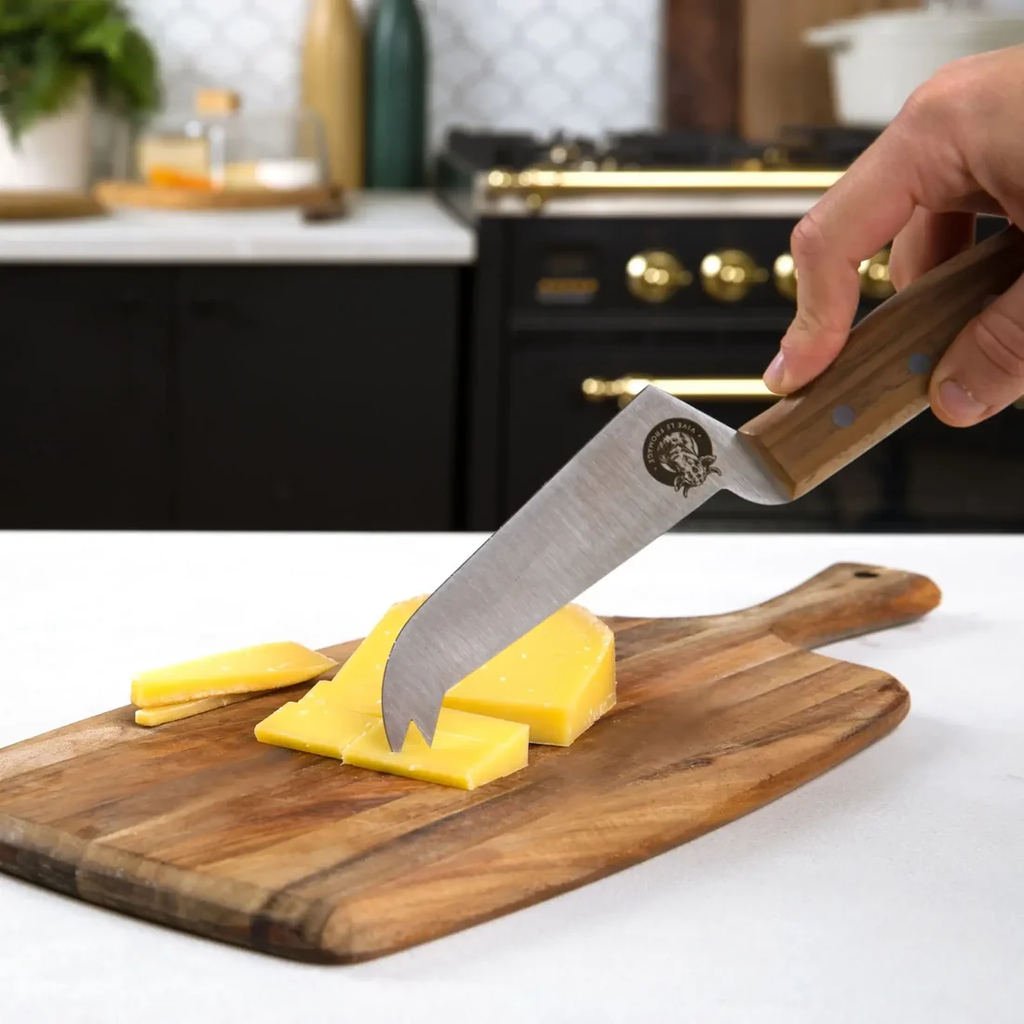
Cheese elevates any gathering but the right knife is what separates a polished board from a messy one. The rule is simple: choose the blade by texture, not by looks. Soft cheeses need minimal surface contact, semi-hard cheeses need a sharp, controlled edge, blue cheese needs a thin narrow blade, and aged hard cheese needs leverage. Get that match right and every cut lands cleanly.
Why the Right Cheese Knife Matters
The wrong knife doesn't just make cutting harder. It actively damages the cheese. A creamy Brie doesn't respond to the same pressure as aged Parmesan, and a crumbly blue won't behave like a smooth young Gouda. When the knife matches the texture, the cheese is easier to cut, easier to serve, and better looking on the board.
Here's the quick-reference breakdown:
- Soft cheeses need thin, open, or perforated blades that reduce sticking and protect the center from collapsing
- Semi-soft cheeses need a clean, controlled cut so the rind and paste stay intact
- Semi-hard cheeses need a sharper blade with enough strength to create neat wedges or thin slices
- Hard cheeses need leverage. They're often better chipped or broken than sliced
- Blue and washed-rind cheeses should have their own knife so strong flavors don't transfer into milder varieties
Good cheese knives protect the cheesemaker's work. They help guests serve themselves cleanly and make the whole board feel more considered.
How to Match Cheese Knives to Cheese Texture
Match the knife to the cheese's softness, firmness, moisture level, and crumble tendency then choose the right tool for the job.
Soft Cheeses
Soft cheeses like Brie, Camembert, Taleggio, fresh mozzarella, soft goat cheese, and cream cheese need a blade that reduces sticking and protects the center. Use the Professional Soft Cheese Knife for clean slices, the Wire Cutter for neat portions from a wheel, or the Professional Spreader Knife for anything spreadable.
Semi-Soft Cheeses
Semi-soft cheeses like young Gouda, Havarti, washed-rind styles, and bloomy-rind wedges need a controlled cut so the rind and paste stay intact. The Wire Cutter handles semi-soft wheels well. The Professional Cheese Knife works for a steadier handheld cut when you need to slice and serve in one motion.
Semi-Hard Cheeses
Semi-hard cheeses like Cheddar, Manchego, Comté, Gruyère, and aged Gouda need a stronger blade that moves through firmer paste without crumbling the wedge. Use the Professional Cheese Knife for larger cuts orMini cheese knives on a board when guests need an easy self-serve option.
Hard Cheeses
Hard cheeses need pressure, control, and a tool that can portion without forcing delicate slices. ReadWhat Are Hard Cheeses before choosing a knife for this category; the cutting approach changes significantly depending on the variety.
The Professional Cheese Knife handles firm cuts on Parmigiano Reggiano and aged Gouda, while the Professional Tasting Cheese Knife is the right pick when you want to break off tasting pieces and lift them cleanly.
Crumbly and Blue Cheeses
Crumbly cheeses like blue, feta, aged Cheddar, crumbly goat cheese, need tools that limit pressure and keep pieces from turning messy. The Professional Blue Cheese Knife handles larger portions cleanly, the Mini Blue Cheese Knife is better suited to boards, and the Mini Soft Cheese Knife w/ Forklet lets you cut and serve smaller pieces without extra handling.
Best Knives by Cheese Category
Here's how the knife recommendations break down by category.
Soft Cheeses: Reduce Contact, Protect the Center
The Professional Soft Cheese Knife uses openings in the blade to prevent sticking. Less surface area means the cheese releases instead of dragging. The Wire Cutter works like a bow knife for soft wheels and goat cheese logs, cutting through without flattening the shape. The Professional Spreader Knife is purpose-built for spreadable varieties. It works far better than a butter knife or spatula.
Semi-Soft and Washed-Rind Cheeses: Clean Cuts, No Drag
The Professional Cheese Knife is the workhorse here. Versatile enough for firm cheeses, and thin enough not to drag a strong rind across the paste. The Mini Serving Knife gives guests a fork-tipped blade for neatly lifting bites from the board without needing a separate serving utensil.
Semi-Hard Cheeses: Strength and Control
The Professional Cheese Knife performs well on Cheddar, Manchego, Comté, and young Gouda because the offset handle controls pressure through firmer paste. A cheese plane also helps when thin slices matter more than chunks. It’s useful for a tasting board where you want uniform pieces across multiple varieties.
Hard and Aged Cheeses: Leverage Over Slicing
Hard and aged cheeses usually need leverage rather than a long slicing motion. The Professional Cheese Knife cuts Parmigiano Reggiano and aged Gouda with control. The Professional Tasting Cheese Knife combines a long sharp edge with a pointed tip. That’s useful for both cracking and lifting pieces in one tool.
Blue and Crumbly Cheeses: Preserve Texture
A Wire Cutter gives blue cheese, feta, and crumbly goat cheese clean lines with less pressure than any blade. The Professional Blue Cheese Knife has a slim blade designed specifically to move through blue cheese without compressing or smearing the paste. The Mini Blue Cheese Knife is the better choice for boards where guests are serving themselves.
Cheese Knife Mistakes to Avoid
Most serving problems come from using the wrong tool or one knife for everything.
Using one knife across the board works in a pinch, but blue cheese flavor transfers fast. As Tessie Ives-Wilson noted in Better Homes & Gardens, "Cheese is still a living, breathing thing!" That's why blue and washed-rind varieties should always have their own dedicated knife so delicate Brie or fresh mozzarella keeps its clean flavor.
Crushing soft cheeses is the other common mistake. A bread knife or standard kitchen knife applies too much downward pressure, collapsing the center before the blade has finished the cut.
Flavor transfer between varieties is easy to avoid: keep strong cheeses separated on the board, use a separate knife per type where possible, and wipe the blade between cuts when sharing tools.
How to Serve Cheese with the Right Knife
One Knife Per Cheese
Use a dedicated knife for each cheese when possible, especially for blue, washed-rind, and mild varieties. The flavor difference is noticeable when you don't.
Room Temperature Serving
The Academy of Cheese recommends serving most cheese at 20–22°C (68–72°F). Letting cheese warm slightly before serving opens up the aroma and makes cutting cleaner, cold cheese is denser and more prone to crumbling under the blade.
Clean Board Layout and Storage
Keep strong cheeses apart, add labels so guests know what they're eating, and wrap any leftovers immediately in cheese wrapping paper or cheese storage bags to preserve flavor and texture until next time.
Conclusion
Texture first, tool second. That's the whole framework. Soft cheeses need thin or open blades; semi-hard wedges need controlled pressure; blue cheeses need narrow tools; and aged cheeses often need breaking, not slicing.A cheese knives set that covers these four categories handles the vast majority of situations without needing a drawer full of specialty shapes.
Start with the essentials, learn the cheese knife types, and let each cheese keep its structure, flavor, and texture where it belongs on the board, not the blade.
FAQ: Cheese Knives and Cheese Boards
What knife is best for cutting cheese?
The best knife depends on texture. Soft cheeses need thin or perforated blades that reduce sticking. Firm semi-hard varieties need a sturdy offset blade with a controlled edge. Hard aged cheeses need leverage rather than slicing pressure.
Why do cheese knives have holes?
The holes reduce surface area so sticky cheeses release from the blade cleanly instead of dragging. It's a functional design choice built around how soft cheese actually behaves. Less contact means a cleaner cut.
Do you need a different knife for each cheese?
Yes, when possible, especially for blue and washed-rind varieties. Separate knives prevent flavor transfer and make the board easier for guests to navigate without mixing strong and mild cheeses.
What cheese knife should I buy first?
Start with a soft cheese knife, an offset Professional Cheese Knife, and a blue cheese knife. Those three cover the widest range of everyday situations and form the core of a functional set.
Can you cut cheese with a regular kitchen knife?
You can, but regular knives stick to soft cheeses, crush delicate centers, and crumble hard varieties. The right knife gives noticeably better results, both in how the cheese looks and how it tastes once it's on the plate.
What Is a Paring Knife Used For — Definitive Guide (2026)
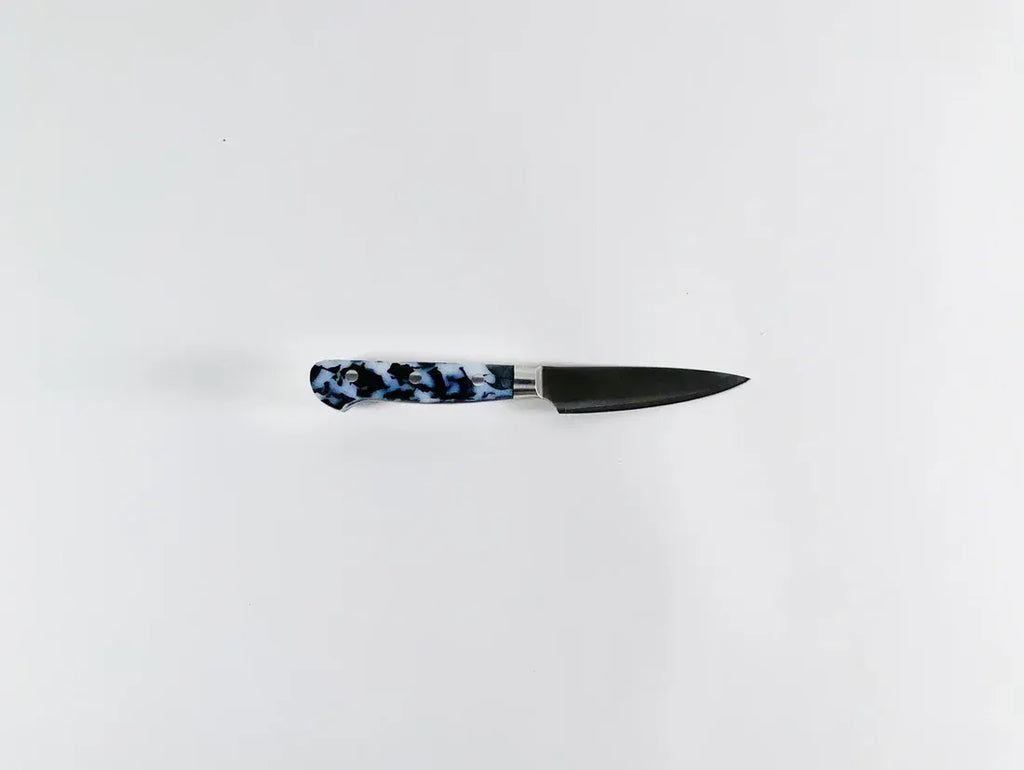
You may already have something like a professional chef’s knife, but you STILL need a paring knife in your kitchen.
This small-but-mighty tool is exceptionally versatile. The size allows for greater control and precision versus larger knives. Read on to learn all the clever ways to use a paring knife.
What Is a Paring Knife? — Key Definitions
It features a small, sharp blade that’s typically 2.5 to 4 inches long. This compact size makes it ideal for intricate tasks like removing skin and stems from fruit, creating garnishes, mincing garlic cloves, and even trimming meat.
The word “paring” comes from an old French term, “parer”, which means to “prepare, trim, adorn.”
Paring knives go all the way back to ancient times, evolving in the Middle Ages to more easily handle complex kitchen tasks.
Here’s how this knife stacks up against other kitchen knives
| Tool | Typical Blade Length | Best For | Compare to Paring Knife |
| Paring Knife | 2.5–4″ | Precision cutting, peeling, coring | Most control for detail |
| Utility Knife | 4–6″ | Mid-size slicing tasks | More versatile, less detail |
| Chef Knife | 6–12″ | Large chopping/slicing | Better for bulk prep |
Top Uses of a Paring Knife
The appeal of a paring knife is in its versatility and the control it provides in performing intricate tasks.
Basic Uses
Peeling & Trimming Produce
A paring knife allows for controlled peeling of things like fruit, potatoes, and citrus.
Celebrity chef Jamie Oliver uses his paring knife to peel citrus for its zest in a way that creates minimal waste.
- Cut a small slice off the top/bottom of the fruit so it sits flat on the cutting board.
- Use the knife to make vertical cuts from top to bottom, following the curve of the fruit, and cutting long, thin strips.
- Focus on the colorful part of the peel, avoiding the bitter white part.
- Finely mince the strips for use in sauces or dressings.
Coring Fruits & Vegetables
A paring knife helps in removing seeds, cores, and stems from things like tomatoes, peppers, potatoes, apples, strawberries, and the like.
Deveining Shrimp
When deveining shrimp, the maneuverable blade of a paring knife gives more control than does a larger tool like a utility knife or chef's knife.
Slicing Small Items (Garlic, Herbs, Strawberries)
This knife makes precise cuts when dicing or mincing shallots, garlic cloves, herbs, and other small ingredients.
Segmenting Citrus (Supreming)
"Supreming" is a technique in which the small, sharp blade of the paring knife is used to efficiently segment a piece of citrus fruit. It allows the bitter white parts to be removed, leaving just clean flesh.
- Slice a small piece off the top and bottom so that it stands upright on the cutting board.
- Using the paring knife, use smooth, downward strokes to cut away the peel and the bitter white pith. You want to expose the flesh.
- Using a firm grip, hold the peeled fruit over a bowl. Insert the tip of the knife on one side of the membrane and slice inward, almost to the center. Make a similar cut on the other side of that segment. It should fall out easily.
- Continue with the whole piece.
Advanced or Creative Uses
Garnishing & Decorative Cuts
The small blade of the paring knife is ideal for carving garnishes, like tomato roses or colorful spirals from vegetable peels.
Chefs also rely on this knife for plating a dish.
- Making shallow scores on the skin of meat, fish, and vegetables.
- Using the tip of the knife for intricate work, like creating a small well in a puree, or precisely positioning delicate items like microgreens atop a sauce.
- Trimming/cleaning, like removing a stem from a strawberry or trimming fat from meat.
Scoring & Surface Techniques
Use the sharp knife for scoring a food surface.
For bread dough, a series of ¼-inch scores at a 45-degree angle allows steam to escape and the dough to expand efficiently.
For meat, shallow cuts help layers of fat to crisp up and marinades to penetrate.
Small Meat & Protein Prep
A paring knife makes it easier to remove “silverskin” (tough, thin membranes in meat). Fat can be trimmed more precisely.
It can better skin fish fillets and remove the small, delicate pinbones.
What Others Don’t Tell You — Unique Insights
Hidden Truths Home Cooks Overlook
For many home cooks, their paring knife gets overlooked in favor of using a chef’s knife. In truth, this small knife performs many kitchen tasks, like chopping herbs, more efficiently. It offers more control and precision, especially in detailed work, than larger knives.
Social media discussions among cooks note that amateurs too often rely on large knives for the small jobs that a paring knife could handle with more precision.
Paring Knife Myths Debunked
The biggest myth? “It’s only for peeling.”
In truth, a paring knife handles many precision tasks in food preparation, like scoring, deveining, trimming, and segmenting. It's also key in creating decorative garnishes.
A paring knife offers maximum control in detailed work or delicate tasks like placing smaller ingredients atop a sauce or other liquid.
Unusual Non-Food Uses
The precision and control of this kitchen essential make it ideal for many uses.
- Slicing through packing tape safely.
- Carving detailed patterns in things like soap, wood – even a pumpkin!
- Trimming and dead-heading plants in the garden.
- Scoring caulk.
- Removing labels.
How to Choose the Right Paring Knife
The perfect paring knife for your kitchen comes down to three basic elements: blade shape, type of steel, and the ergonomics of the handle.
Blade shape
- Spear point: The traditional paring knife with a pointed tip for slicing, peeling, dicing, and trimming.
- Bird’s Beak paring knife: A slightly curved blade for peeling round fruits, hulling strawberries, and creating garnishes.
- Serrated: This blade saws through tough skins.
- Sheep’s Foot: A straight-edge blade for maximum precision and control.
Material
Choose from stainless, high-carbon or ceramic for the blade (see following chart for comparison).
Handle ergonomics
You want one that offers a good grip for better control and ergonomics for comfort.
Data Table: Material Comparison
| Material | Edge Retention | Rust Risk | Maintenance |
| Stainless Steel | Good | Low | Easy |
| High Carbon | Excellent | Medium | Medium |
| Ceramic | Very High | Very Low | Fragile |
Safety & Best Practices
- For less effort and more precision, ensure that your paring knife stays sharp and has a good grip. This also reduces “slips” which can be dangerous.
- Use the “claw” technique, curling the fingers of your non-dominant hand in and using knuckles as a guide for the knife blade when chopping or mincing on the cutting board.
- For peeling, use your thumb to guide the fruit/vegetable. This keeps fingers out of the path of the blade.
- Don’t use a paring knife on large or hard foods like squash or watermelon. It’s good for removing thin bones, like those on a fish fillet; avoid trying to cut heavier bones.
- Hone the knife blade weekly and sharpen it each month. Hand wash only. Store on a magnetic strip, in a knife block, or in a protective sheath.
Conclusion
As we’ve shown, a quality paring knife is among the most versatile tools in the kitchen. The short blade and sharp tip make so many tasks much easier and offer the chance to elevate any dish with garnishes, cleaner presentation, and less waste in preparation.
For example, a paring knife is a great tool for cheese: cutting away rinds, slicing small pieces of hard cheese or other bits for your charcuterie board, and the like. (And when you’re done serving, our cheese storage bagsensure the product will stay fresh and flavorful!)
Explore the best paring knives at Formaticum.com! Plus, we offer professional cheese knives and mini cheese knives, too.
Frequently Asked Questions
Can I use a paring knife on meat?
It’s good for scoring meat and trimming away fatty bits. However, avoid using it for cutting thick bones.
Paring knife vs peeler: when to use each
A peeler is good for peeling large amounts of produce quickly, especially on things like potatoes and carrots. It’s got one function.
A paring knife works best with fruits/vegetables that have delicate skin. The tip makes it efficient for cutting out bad spots, removing stems, and seeds. It can also be used to create artistic elements like a garnish.
How to sharpen a paring knife
Use either a whetstone sharpener or a honing steel to keep the blade of your paring knife sharp. Hold the knife at a 20-degree angle and gently slide the blade along the edge.
What is a Cheesemonger? - Complete Guide to the Role, Skills & Why It Matters

Behind every perfectly wrapped wedge of Brie or hunk of aged Comté is a trained professional. Like a sommelier for wine, this specialist offers expert advice on all things cheese: pairings, tastings, storage, and so much more.
The demand for specialty cheese is exploding. Consumers want expert guidance navigating the cheese world. That involves everything from the best way to slice and serve them to storing themto be enjoyed longer. This is where a cheesemonger comes in.
What Is a Cheesemonger?
The simple definition of a cheesemonger is a trained professional who selects, ages, stores, cuts, and sells cheese while advising customers on flavor profiles and what cheeses pair with what.
A “monger” is an old word from Old English, denoting a merchant for a specific commodity. However, not every person associated with cheese earns that title.
- Cheesemaker: Oversees every part of the cheese-making process. This includes selecting the ingredients, creating the curds and whey, cutting, salting, and pressing the cheese.
- Affineur: Specifically, “refines” the aging process. They physically turn the cheese, brush and wash it to develop the rind and flavor, and monitor humidity, temperature, and airflow.
- Cheesemonger: The monger is an expert in the selection, care, and sale of artisan and specialty cheeses.
| Role | Primary Responsibility | Works With |
| Cheesemaker | Produces cheese | Milk & cultures |
| Affineur | Ages & refines cheese | Aging caves |
| Cheesemonger | Sells, promotes & stores cheese | Customers |
A Brief History of Cheesemongers
Cheesemongers started in monasteries, with monks in charge of producing and managing cheese.
By the 13th century, cheese shops were popping up in France and the UK. In those medieval markets, fromagers in France were producing their own.
By the time of the Industrial Revolution, demand for cheesemongers fell as an emphasis on cheese volume took hold. After World War II, soldiers returning to America brought back products from other parts of the world, sparking greater interest in different food producers.
In the 1980s, demand for specialty cheeses increased. By the 1990s, grocery stores were adding to their selection. That required expertise to educate customers and provide customer service when buying cheese.
What Does a Cheesemonger Actually Do?
Cheese Selection & Sourcing
Like a wine expert, the true cheesemonger knows and evaluates various producers from all over the world. They understand the regions, ingredients, production methods, and seasonal availability.
Proper Storage & Aging
A good cheesemonger understands the importance of storage conditions. They’ll tell you that plastic wrap ruins cheese because it “suffocates” it and can lead to unwanted mold growth.
Breathability is essential to storing cheese.Speciality storage paper or cheese storage bags will extend the lifespan.
The proper mix of temperature and humidity also plays a role; the vegetable crisper in your refrigerator is ideal.
Cutting & Presentation
The way you cut cheese makes a huge difference in the flavor profile and presentation. From professional cheese knives to mini cheese knives for use at a party, the monger will recommend the right knife for cheese styles (soft, semi-soft, hard, and the like).
They’ll also happily share portioning techniques and show you how to prevent cross-contamination of flavors.
Pairing Recommendations
Part of the training for a cheesemonger involves an education in various flavor profiles. This helps them provide expert recommendations for pairing with other foods and beverages like wine, beer, fruit, nuts, chocolate, and charcuterie.
Skills Required to Become a Cheesemonger
Becoming a good cheesemonger takes several years of focused training in specific areas. Beyond the hands-on skills, they must also be able to describe and communicate this information effectively with customers.
Sensory Expertise
Identifying flavors, aromas, and ripeness. They must be able to recognize specific taste notes (fruity, nutty, etc.) and whether the flavor lasts or is short-term.
Using touch and sight, they assess the texture of the rind and the interior of the cheese.
Food Safety Knowledge
Understanding and adhering to the important food safety standards established by the FDA is a key part of a cheesemonger’s responsibilities.
Customer Education & Sales
To help the customer make the best decision, the cheesemonger must translate complex flavor notes into simple, precise language.
Certifications
Not every cheesemonger is officially certified; many learn through passion and experience. Certification isn’t a legal requirement in the cheese industry.
However, completing the exam to become an American Cheese Society Certified Cheese Professional (ACS CCP) reflects a high level of expertise.
Apprenticeship programs offer hands-on training in various areas, such as cutting, flavor profiles, and more.
What Others Don’t Tell You About Cheesemongers
- According to the American Cheese Society, there are only about 1,200 certified cheesemongers worldwide. That means that not every cheese counter will have one.
- You’re more likely to find quality advice at a specialty shop or farmer's market than at your local grocery store. They curate artisanal brands, whereas a supermarket focuses on volume and convenience.
- One of the most common mistakes consumers make is improper storage of cheese. Never wrap it in plastic; cheese must breathe. Choose wax paper,cheese storage paper, or a cheese storage bag.
- Knowledgeable cheesemongers don't just sell cheese. They’re experts on sourcing, flavor profiles, aging, safe handling, and education. They simply love to talk cheese!
How to Spot a Great Cheesemonger
Among other cheesemongers, how do you know that you’ve found your go-to person?
- They’ll ask you about your taste preferences to narrow down your selections.
- They’ll offer samples, but responsibly. These will be targeted to your preferences, so your palate doesn’t get overloaded.
- They’ll give you the right advice on how to store your purchases.
- They’ll recommend the right cutting tools for particular cheeses, such as a knife for soft vs hard cheeses.
How Cheesemongers Store Cheese
Cheesemongers understand that the right conditions make all the difference in storing cheese.
- Humidity testing: Ideal “relative humidity” is 75-95 percent in a temperature range of 50-55 degrees F. This covers most soft and hard cheeses. At home, the crisper section of your refrigerator most closely replicates the range.
- Airflow comparison: Too little airflow creates high humidity and unwanted mold. Too much dries out the cheese.
- Mold control analysis: Cheese samples are monitored to detect or prevent mold growth.
- Controlled refrigerator testing: Scientific monitoring of the temperature and environmental conditions in storage areas.
When testing home storage methods for cheese, breathable cheese storage paper or bags performed better than wax paper, plastic wrap, or plastic bags. They allowed for proper air flow to prevent mold or drying out.
How to Store Cheese Like a Cheesemonger
- Remove any plastic wrap. Re-wrapping in plastic after it’s opened “suffocates” the cheese.
- Wrap in breathable cheese paper.
- Store it in your vegetable drawer. This section of your refrigerator offers the ideal temperature/humidity control.
- After cutting cheese, rewrap it in the cheese paper or storage bag.
Frequently Asked Questions
Is a cheesemonger the same as a cheesemaker?
No. The cheesemaker specifically presides over the production; the cheesemonger sells a variety of cheeses made by various producers. A cheesemonger has a deep understanding and knowledge of its aspects, including pairings, safe handling, complex flavor profiles, and more.
Do cheesemongers age cheese?
Some cheesemongers are “affineurs,” a special class of monger responsible for refining it after it’s been made. They manage the temperature and physical conditions for proper aging.
How do you become certified?
To become a certified cheese professional (CCP), the American Cheese Society (ACS) requires one of the following:
- 4,000 hours of industry experience and the passing of a 150-question exam.
- 2,000 hours of experience, combined with education, and the passing of a 150-question exam.
Why does cheese need special paper?
Cheese paper allows the proper airflow to prevent the item from either “sweating” or drying out.
Conclusion
It's not just a job to sell cheese: an approachable cheesemonger is passionate about this delicious food! They'll share stories, tasty recommendations, and ensure you get the most out of your purchase after it's sold. If you’ve never worked with one, you’ll discover a true taste adventure.
Besides recommending great selections, they share the best ways to both serve and store them. For example, the right knivesmake a huge difference in presentation, flavor profile, and reducing waste. A soft cheeselike Brie requires something different than a wedge of hard Parmigiano Reggiano.
Storage conditions are also important. Replicate the ideal temperature/humidity balance by keeping your product in the crisper of your refrigerator. Use professional cheese storage bagsdesigned for breathability to preserve flavor and freshness.
Take your passion for artisanal cheese to the next level by getting to know your local cheesemonger. It’s a game-changer!
Cheese Knife Types Explained: Uses, Shapes & Tips

It’s simple: different kinds of cheese require different cheese knives. The right tool makes a huge difference in slicing and serving, enhancing presentation, optimizing taste, and reducing waste.
Formaticum is passionate about bringing cheese lovers the highest-quality knives and storage products to get the most enjoyment out of this delicious food. This ultimate guide will provide expert insights, tips, and more about the different kinds of cheese knives.
What Is a Cheese Knife?
A cheese knife has a special blade shape specifically designed to handle the various textures of cheese. A soft cheese like Brie needs the right tool to cut it, whereas a hard cheese like a wedge of Parmesan needs something altogether different.
Kitchen knives often fail at these tasks. The design of their thick blades is inefficient on cheese: it can cause a hard cheese to crumble and soft cheeses to stick.
Why Knife Types Matter
Cheese knives are specifically engineered to expertly slice, serve, or spread different kinds of cheese. Using the right one ensures clean cuts. It preserves the texture and enhances presentation, whether on a cheese board or when serving to others.
Most importantly, it enhances the flavor experience. For example, using a cheese plane on a semi-hard cheese like Gouda reduces the surface area. A thinner slice spreads and warms the cheese over the taste buds to ensure maximum flavor in every bite.
A soft cheese knife has a thin blade and holes that prevent something like Brie or Delice de Bourgogne from sticking.
Using the right knife can keep different cheeses from mixing, such as a soft cheese and a hard one. You enjoy the exact right taste and texture.
Cheese Knife Types & Uses
Soft Cheese Knife
A soft cheese knife has a thin, narrow blade with holes along the sharp blade. This reduces the surface area to keep delicate soft cheeses from sticking to the blade and disturbing the paste. Some also feature a forked tip that helps in serving slices cleanly.
Ideal for cheeses like Brie, Camembert, aged goat cheese, Taleggio, and other soft cheeses.
Hard Cheese Knife
The strong, thick blade is perfect for breaking or chipping off chunks of hard cheese without crushing or crumbling.
Ideal for Parmesan, Cheddar, and aged Gouda.
Pronged / Fork-Tipped Knife
This cheese knife, with its sharp, narrow blade and pronged tip, allows you to both cut and serve with one specialized tool.
Great for cutting and serving semi-firm cheeses like Monterey Jack and Provolone.
Cheese Spreader
A cheese spreader knife has a blunt, rounded blade that makes it perfect for spreading creamy, soft cheeses.
Ideal for ricotta, fresh chevre, cream cheese, mascarpone, and the like.
Parmigiano Reggiano / Spade Knife
This knife has a spade-shaped blade with a dagger-like tip. The combination makes it easier to break through the rinds on a wheel or wedges of cheese and cut rustic chunks without destroying the overall structure.
Ideal for hard cheeses like Pecorino and Parmigiano Reggiano, but can also be used on a semi-hard cheese like Cheddar.
The Professional Blue Cheese Knife is not included in this list and should be featured.
Cheese Knife Comparison Table
| Knife Type | Best For | Blade Feature | Serve / Slice |
| Soft Cheese Knife | Soft cheeses | Thin, hollow blade | ✔️ |
| Cheese Spreader | Fresh, spreadable | Flat, rounded | ✔️ |
| Hard Cheese Knife | Hard cheeses | Thick, Sturdy | ✔️ |
| Parmigiano Knife | crumbling/chunking | Pointed tip, tapered blade | ✔️ |
| Pronged Knife | Serving | Forked tip | ✔️ |
How to Choose the Right Knife for Your Cheese Board

When choosing knives, consider the categories. Start with soft and move up to any harder varieties. It’s good to have different knives, not just for their specialized blades, but so that they won’t mix flavors.
The choice of material is important for your cheese knife. You want quality blades for optimal cutting performance. The handles should provide ergonomic control and comfort.
One way to ensure that you have everything you need when you need it is to opt for a knife set, like Formaticum’s set of mini cheese knives. Our knives are handmade in Italy, with stainless steel blades and solid walnut handles.
With our cheese knives, you’ll always have the exact right tool to complement your cheese board.
Real Examples
Case Study: A Party Cheese Board
Not only will the right knives look great and make it easier to serve the cheese, but they will also prevent the various textures and tastes from “mixing.” You’ll have a much better tasting experience!
- For soft cheeses, like Brie or goat cheese, have a cheese spreader or soft cheese knife at hand for these spreadable cheeses.
- Cut semi-hard cheeses, like Cheddar or Swiss, with apronged cheese knife like the Professional Tasting Knife
- Chunks of hard cheeses like Pecorino will be easier to cut with the Professional Cheese Knife. You might also want a forked knife with a pointed tip to help serve individual pieces, such as the Professional Tasting Knife.
What Others Don’t Tell You
The differences between well-made cheese knives and your basic kitchen or butter knife are deliberate and important to a quality experience. Here are some important aspects.
Cheese knives often use an offset handle and an offset blade versus a straight one. These small details give more control when slicing, plus more ergonomic comfort.
Using a tabletop wire cutter like the Handee Cutter gives a cleaner, more uniform cut than using a knife. It also greatly reduces the effort needed for cutting.
A tabletop wire cutter is also safer than a knife, especially when cutting through a wheel of hard cheese. Even on a delicate gorgonzola or blue cheese, it maintains the structure without smashing or crumbling it.
A soft-cheese knife has a thin, narrow blade with holes along it. Those holes specifically work to prevent the delicate paste from sticking to the blade when slicing something like Brie, unlike a regular knife.
Frequently Asked Questions
What cheese knife types are essential?
The four knives you must have for cutting cheese include a spreader for creamy cheeses, a soft cheese knife, a blue cheese knife, and a hard cheese knife - all contained in Formaticum’s Professional 4-Knife Set.
A pronged cheese knife with its pointed tip and a handheld Wire Cutter are also very helpful cheese tools.
Do I need a separate knife for each cheese?
For casual snacking, no. However, when entertaining, it's good to have one cheese knife for each cheese. This prevents different flavors from mixing or passing mold from something like a blue cheese to another kind.
Why do some cheese knives have holes?
A soft cheese knife has a thin, sharp edge with holes along it. These reduce surface area, preventing soft or semi-soft cheese from sticking.
How to clean & store cheese knives?
Cheese knives should be hand-washed with warm, soapy water. Rinse and dry them thoroughly to prevent rust. Don't put them in the dishwasher because that can damage the handles and dull the sharp edge. Store them away from other utensils.
Conclusion
The right knife for cutting cheese makes enjoying it so much more enjoyable. It enhances the taste, highlights the unique texture, and makes the presentation more elegant.
Whether it's a semi-hard cheese, a gorgeous hunk of cheddar, parmesan, a gorgonzola, or a soft Brie, the right knife or cheese fork will make a huge difference.
Elevate your entertaining with Formaticum's line of quality professional knives,mini cheese knives, and other tools.

Formaticum News
Our home to share our cheese chronicles and more.
Categories
Recent Posts
Wire Cheese Cutter Vs Traditional Knife: Choosing the Right Tool for Your Cheese
5 Best Knives for Cutting Different Types of Cheese
10 Cheese Storage Tips to Keep It Fresh Longer
Upcoming Events
Connect with Us
Join the Newsletter
Sign up to receive special offers, new product releases, updates from the cheese shop, and more.